.svg)
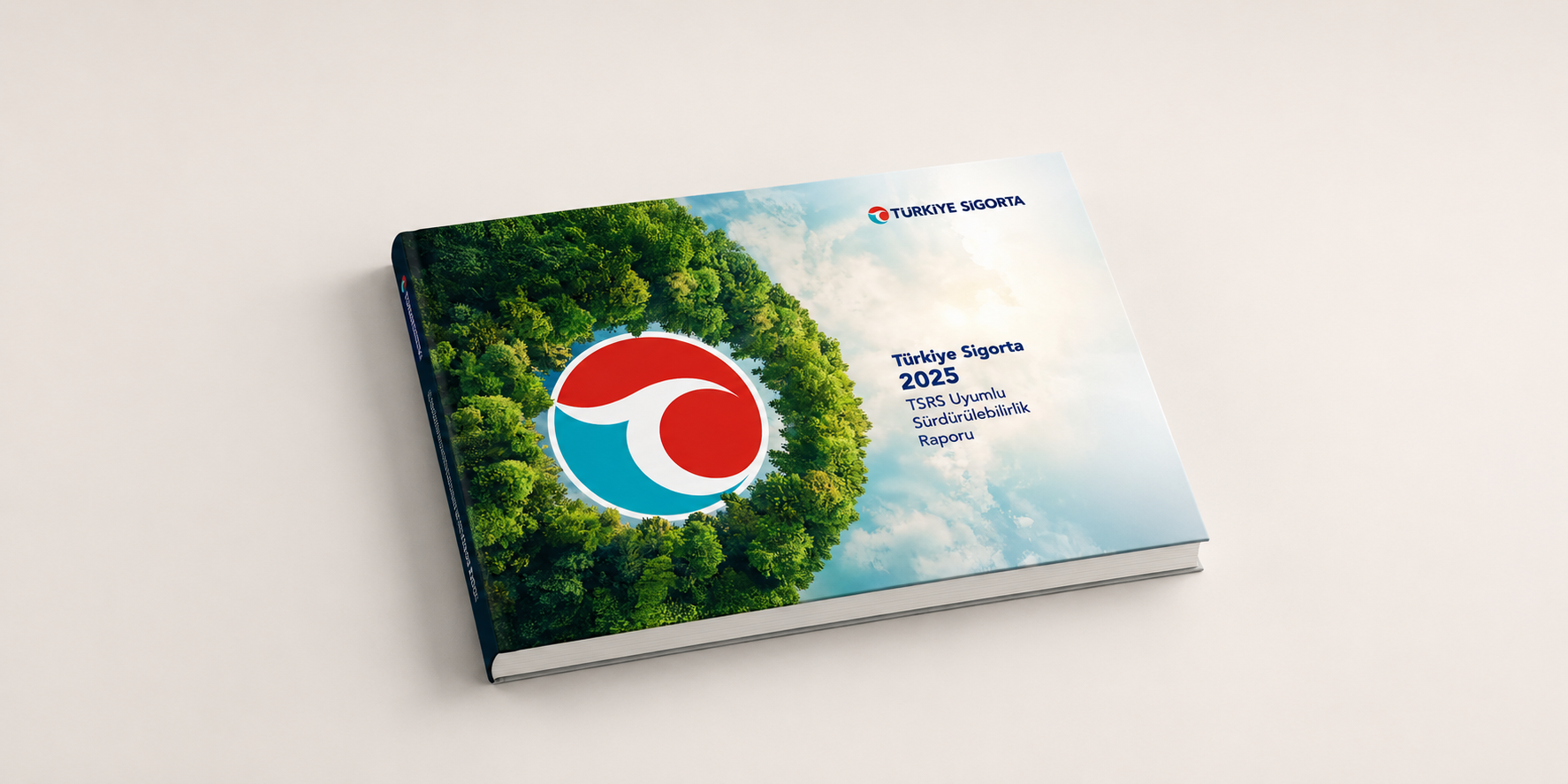
For Türkiye Sigorta’s 2025 TSRS-Compliant Sustainability Report, we delivered an integrated TSRS advisory and sustainability reporting process that brought together technical expertise, climate analysis and technology.
Published on 26 January 2026 as the first TSRS report of the year, the report connects Türkiye Sigorta’s sustainability and climate agenda with financial impacts, enterprise risk management and long-term strategy.
At Sustable, we combined our sustainability reporting expertise with Sustable AI to manage the extensive requirements of TSRS through a more systematic, consistent and traceable reporting approach.
We approached TSRS reporting as more than a regulatory compliance exercise. By understanding Türkiye Sigorta’s business model, governance structure and strategic priorities, we connected sustainability reporting with the company’s broader corporate framework.
The report was structured around the four core pillars of TSRS: Governance, Strategy, Risk Management, and Metrics & Targets.
Rather than addressing these requirements as separate disclosures, we brought them together within an integrated narrative that demonstrates how sustainability-related risks and opportunities connect with Türkiye Sigorta’s strategy and long-term resilience.
A central part of our TSRS advisory approach was establishing a clear relationship between sustainability-related risks and opportunities and Türkiye Sigorta’s strategic decision-making.
We developed a systematic framework for identifying, assessing and prioritising risks and opportunities across the company’s operations and value chain, incorporating financial materiality into the assessment process.
This enabled sustainability-related matters to move beyond individual reporting requirements and become decision-making areas connected with strategy, enterprise risk management and long-term value creation.
Understanding future resilience is a critical part of climate-related financial reporting. Our work therefore extended beyond Türkiye Sigorta’s current sustainability performance.
Through climate scenario analysis, we assessed physical and transition risks under different future conditions and connected the findings with the company’s strategy, business model and risk management approach.
This enabled climate change to be considered not simply as an environmental issue, but as a factor with potential strategic and financial implications for long-term resilience.
One of the defining aspects of the project was the active integration of Sustable AI into the reporting process.
TSRS reporting requires extensive corporate information, methodologies, risks and opportunities, and disclosure requirements to be evaluated within a consistent structure. We used Sustable AI as a technology layer supporting our consultants throughout this process.
Rather than replacing expert judgement, Sustable AI complemented it by supporting the systematic management of complex information, the assessment of reporting requirements and consistency across the report.
This combination of human expertise and sustainability technology enabled us to bring TSRS advisory and AI-supported reporting together within a single working model.
Technical depth should not create complexity for the reader. We therefore focused on making extensive TSRS requirements accessible without compromising the quality of the underlying information.
From governance and strategy to climate risks and opportunities, scenario analysis, metrics and targets, we structured the report within a clear and consistent information architecture.
The TSRS Index further strengthened traceability by connecting TSRS 1 and TSRS 2 requirements with their corresponding disclosures throughout the report.
The result was a technically robust sustainability report with a clear, systematic and accessible reporting experience.
For us, sustainability reporting quality extends beyond the final narrative. The information, methodologies and disclosures behind the report must also form a consistent and traceable structure.
We therefore managed the reporting process with independent assurance readiness in mind, supporting the integrity and traceability of the underlying reporting structure.
Türkiye Sigorta’s 2025 sustainability information was subsequently subject to independent limited assurance under TSRS.
This approach enabled reporting advisory, technical methodology and assurance readiness to work as connected parts of the same process.
For Türkiye Sigorta, we brought together TSRS advisory, sustainability reporting, climate risk and opportunity analysis, climate scenario analysis and Sustable AI within an integrated working model.
By combining sustainability expertise with proprietary technology, we created a systematic and traceable reporting framework that connects TSRS requirements with Türkiye Sigorta’s business model, enterprise risk management and strategic priorities.
Published on 26 January 2026 as the first TSRS report of the year, the project demonstrates how Sustable combines sustainability consulting and technology to move TSRS reporting beyond compliance and towards a more integrated, decision-useful reporting approach.


.svg)
.svg)

.svg)

.svg)
