.svg)
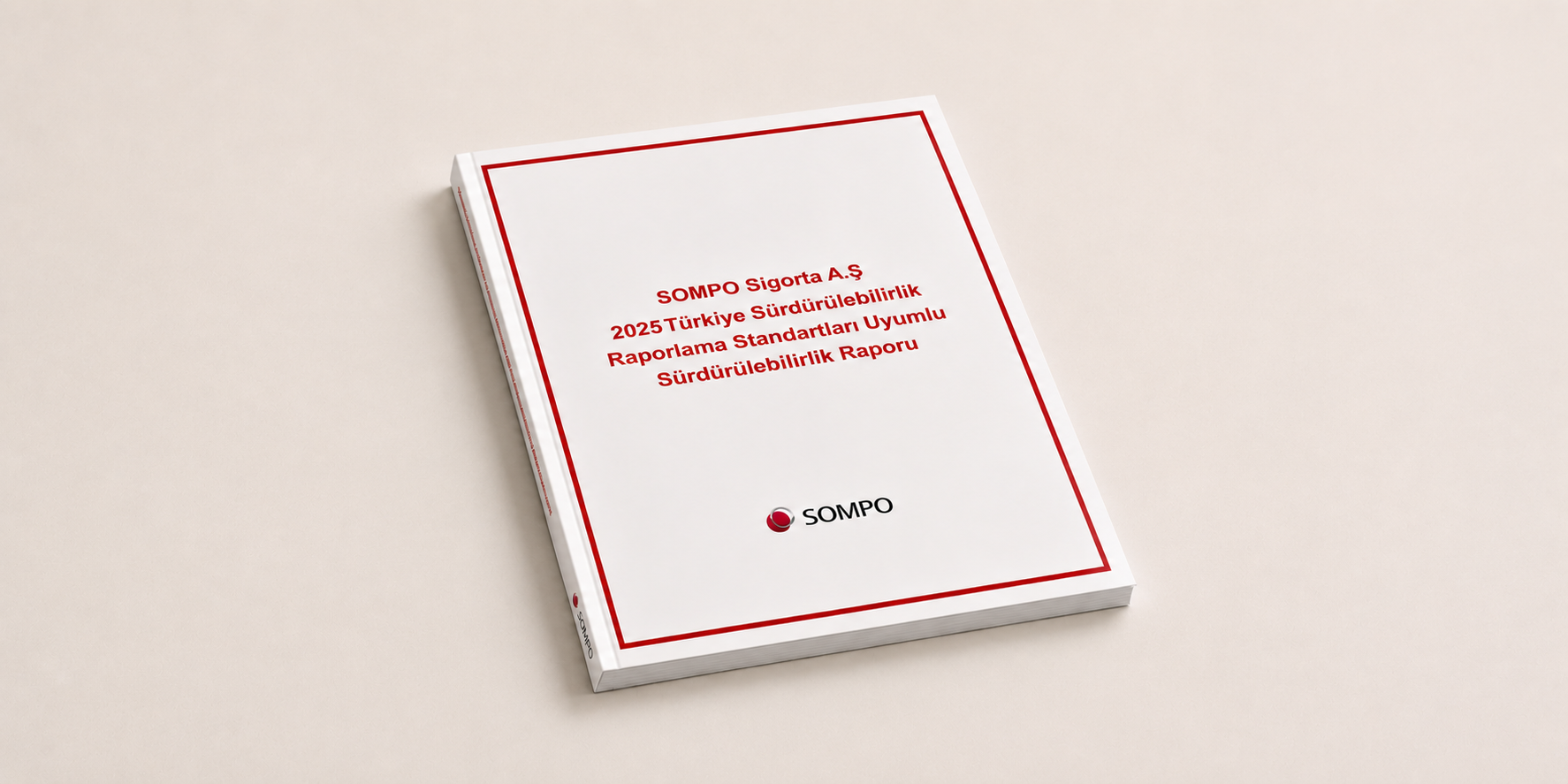
For Sompo Sigorta’s 2025 TSRS-Compliant Sustainability Report, we delivered TSRS advisory and sustainability reporting with an approach built around the specific dynamics of the insurance industry.
At Sustable, our focus went beyond preparing a report that meets TSRS 1 and TSRS 2 requirements. We assessed what climate change means for Sompo Sigorta in connection with its business model, value chain, risk management approach and financial resilience.
This enabled us to transform technical reporting requirements into an integrated TSRS reporting frameworkconnected with the way the company operates and makes decisions. The report was structured around the four core pillars of TSRS: Governance, Strategy, Risk Management, and Metrics & Targets.
In the insurance industry, the impacts of climate risk extend far beyond a company’s own operations. We therefore made Sompo Sigorta’s value chain a core part of the reporting process.
From actuarial functions and product development to underwriting, reinsurance, investments and customer services, we assessed how climate-related risks and opportunities interact with upstream activities, the company’s own operations and downstream activities.
This approach enabled sustainability-related matters to be connected directly with Sompo Sigorta’s business model and insurance activities, rather than remaining standalone reporting topics.
Throughout the TSRS advisory process, we focused on connecting climate-related risks and opportunities with Sompo Sigorta’s existing risk management approach rather than creating a separate sustainability risk system.
Drawing on sector-specific guidance, peer analysis and the company’s own risk management framework, we assessed identified risks and opportunities within the Risk Appetite Framework. By considering both probability and financial impact, we strengthened the position of climate-related matters within the company’s broader risk management structure.
This moved TSRS reporting beyond disclosure and created a stronger connection between sustainability, enterprise risk management and strategic decision-making.
Our work considered not only Sompo Sigorta’s current risk profile, but also its resilience under different future climate conditions.
We assessed physical climate risks across different scenarios and time horizons, connecting the findings with Sompo Sigorta’s insurance activities. The report uses RCP4.5 and RCP8.5 climate scenarios to support short-, medium- and long-term assessments.
Rather than treating climate scenario analysis as a theoretical exercise, we connected it with underwriting, claims, actuarial functions, reinsurance and financial resilience.
We did not approach climate change solely as a source of risk. The opportunities emerging from the transition to a low-carbon economy were also incorporated into the reporting process.
Sompo Sigorta’s approach to products for electric and hybrid vehicles and sustainable mobility was considered in the context of changing customer needs and the low-carbon transition. Innovative insurance solutions for electric vehicles and car-sharing models were identified in the report as climate-related opportunities.
This enabled us to connect the TSRS risk and opportunity perspective with Sompo Sigorta’s product development and long-term growth strategy.
Strong sustainability reporting depends not only on the quality of disclosures, but also on clearly defined responsibilities behind them.
The Sustainability Committee established in 2025 strengthened the governance structure supporting sustainability and climate-related matters. Its responsibilities include sustainability strategy, targets and performance indicators, as well as coordination of the TSRS-compliant reporting process.
By making the connections between the Board of Directors, Executive Committee, Risk Management, Actuarial, Reinsurance and other relevant functions more visible, we strengthened the relationship between sustainability, governance and risk management.
Rather than presenting the extensive technical requirements of TSRS as a compliance checklist, we transformed them into a clear information architecture built around Sompo Sigorta’s own corporate structure and narrative.
We structured governance, strategy, climate resilience, risks and opportunities, scenario analysis, metrics and targets within a consistent reporting framework.
The TSRS Index further strengthened traceability by connecting TSRS 1 and TSRS 2 requirements with the relevant disclosures throughout the report.
The result was a clear, systematic and professional TSRS report that retains technical depth without passing unnecessary complexity on to the reader.
We believe sustainability reporting quality extends beyond the final narrative. The traceability of information, methodologies and disclosures is equally important.
We therefore managed the process with an approach designed to support independent assurance. Sompo Sigorta’s 2025 sustainability information was subject to independent limited assurance under TSRS 1 and TSRS 2.
This ensured that the reporting process was supported not only by a strong corporate narrative, but also by the methodology and control structure behind it.
For Sompo Sigorta, we brought together TSRS advisory, sustainability reporting, climate risk and opportunity assessment, and climate scenario analysis within the real-world dynamics of the insurance industry.
The result went beyond meeting TSRS requirements. It created an integrated reporting experience that makes the connections between climate-related risks and opportunities and Sompo Sigorta’s business model, value chain, governance structure and enterprise risk management more visible.
Through Sustable’s sustainability and TSRS advisory approach, we transformed complex reporting requirements into a framework aligned with the company’s operations — one that reports current performance while also supporting a more structured understanding of long-term climate resilience.


.svg)
.svg)

.svg)

.svg)
